
Stair climbing is something people do every day; however knee pain can make small steps hard to climb. Knee pain while climbing stairs can happen because of muscles, stiff joints, too much use or a knee problem that's already there.
If you discover the reasons for your knee pain while going up the stairs, then you will be able to discover the appropriate method of treating this pain. As per Dr. Rajneesh Kant, it is essential that one understands his/her condition before choosing a mode of treatment. It will be useful for one to understand the various things related to knee pain physiotherapy in Mumbai.
Why Knee Pain Occurs While Climbing Stairs
Your knees support your body weight and help you bend, straighten, and move. Climbing stairs requires the muscles around your knees to work harder than during many everyday activities on level ground. Walking downstairs also requires control as your body lowers onto the next step.
When the knee is irritated, weak, or affected by an existing condition, these movements may cause discomfort. According to Dr. Rajneesh Kant, paying attention to when the pain occurs and which movements make it worse can help guide further assessment.
Common Causes of Knee Pain When Going Upstairs or Downstairs
Several conditions and physical factors may contribute to knee discomfort.
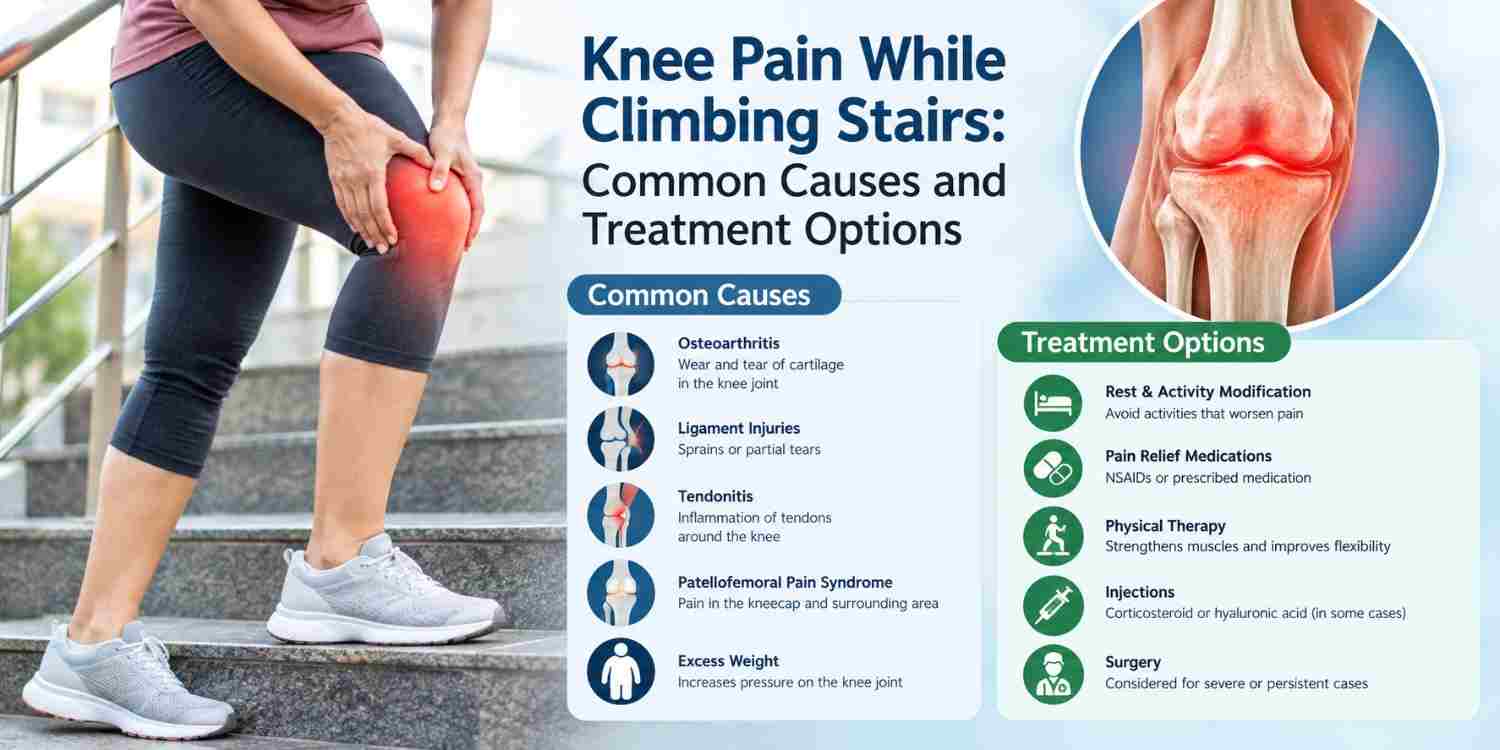
- Patellofemoral pain syndrome: This condition causes pain around or behind the kneecap and may become noticeable during stair climbing, squatting, or prolonged sitting.
- Knee osteoarthritis: Changes in the joint can cause pain, stiffness, and difficulty with weight-bearing activities.
- Muscle weakness: Reduced strength in the quadriceps and hip muscles may affect knee control during movement.
- Overuse or previous injury: Repeated demanding activities or an earlier knee injury may contribute to ongoing discomfort.
These knee joint pain causes can produce similar symptoms, so pain alone cannot confirm a specific diagnosis. Dr. Rajneesh Kant recommends considering the person's symptoms, activity level, and physical condition when exploring suitable care.
How to Recognise Symptoms That May Need Attention
The symptoms of knee pain can be different, for everyone. They depend on what's causing the pain. Some people feel pain when they move. Others feel stiff after sitting or lying down for a while. Common signs include:
Common signs include:
- Pain around or behind the kneecap.
- Knee stiffness after climbing stairs or sitting for a long time.
- Swelling or tenderness around the joint.
- Clicking or grinding sensations accompanied by discomfort.
- Difficulty bending the knee or completing everyday activities.
Knee pain when going upstairs may feel different from knee pain when walking downstairs. For example, descending stairs may be particularly uncomfortable for some people with kneecap-related pain. Persistent symptoms or reduced mobility should be assessed rather than ignored.
Physiotherapy for Knee Pain: Treatment and Benefits
Physiotherapy for knee pain can help knee pain by making the knee stronger and improving the ability to handle tasks more easily. The treatment plan for knee pain depends on the problem, the severity of knee pain symptoms and the physical needs of the person with knee pain.
A physiotherapy assessment may include reviewing your medical history, checking knee movement, evaluating muscle strength, and identifying activities that increase discomfort. Treatment may involve guided strengthening exercises, mobility training, activity modification, and advice on gradually returning to normal routines.
If you are researching the Best Physiotherapists in Mumbai, look for qualified professionals who assess your condition carefully and explain your treatment options. Dr. Rajneesh Kant highlights the value of an individualised approach rather than relying on the same treatment for everyone.
Exercises for Knee Pain and Better Stair Mobility
Suitable exercises may help strengthen the muscles that support the knee and improve movement. However, the right exercises depend on your symptoms and the cause of your pain.
Some options a healthcare professional may recommend include:
- Gentle knee bends: Practise comfortable knee movement within your available range.
- Quadriceps strengthening: Exercises such as straight-leg raises may help strengthen the front thigh muscles.
- Hip strengthening: Appropriate hip exercises can support better control of the leg during movement.
- Gentle walking: Start with a manageable duration and increase activity gradually as tolerated.
These exercises for knee pain should not cause sharp or increasing discomfort. Stop if your symptoms worsen and seek professional advice before continuing.
Daily Habits to Reduce Knee Strain While Using Stairs
Small changes may make stair climbing more manageable and help you stay active.
- Use a handrail for additional support when needed.
- Wear comfortable footwear that provides suitable support.
- Avoid sudden increases in intense exercise or repetitive stair climbing.
- Take breaks when your knees feel tired.
- Maintain regular physical activity suited to your ability.
These habits may help manage knee pain and mobility problems, but they cannot replace treatment when an underlying condition requires medical attention.
When to Seek Medical Help for Knee Pain
If you have knee pain that lasts a long time, your back often gets worse or makes it hard to walk or do everyday things see a healthcare professional.
If you can't put any weight on the leg that is hurt, can't move the knee the way or have a lot of swelling after an injury, get medical help right away. A knee that is very red hot and also has a fever needs quick attention because it could be a serious problem.
Dr. Rajneesh Kant says it is important to get professional help when the symptoms stop you from moving normally or when they don't get better even after you make some changes to your activities.
Frequently Asked Questions About Knee Pain on Stairs
Why does my knee hurt when walking downstairs but not on flat ground?
Walking downstairs requires controlled bending and lowering of your body weight. Certain knee conditions may make this movement more uncomfortable than walking on level ground.
Can weak muscles contribute to knee pain while climbing stairs?
Yes. Reduced strength in the quadriceps and hip muscles may affect knee control and contribute to discomfort in some people.
Can physiotherapy help improve knee mobility?
Physiotherapy may help improve strength, movement, and everyday function through an individualised treatment plan.
When should I consult a healthcare professional?
Seek an assessment if pain persists, worsens, or limits daily activities. Severe pain, major swelling, inability to bear weight, or a hot, red knee with fever needs prompt medical attention.
Get Professional Guidance for Knee Pain
Managing knee pain starts with understanding its possible cause and choosing the right treatment. Dr. Rajneesh Kant emphasises the importance of individual assessment, personalised guidance, and gradual improvement in mobility.
If knee pain is making it difficult to climb stairs or manage daily activities, get in touch with us today to learn more about suitable treatment options and take the next step towards better knee health.